“Eco-Friendly Basketball Uniforms” gets stamped on a lot of sportswear these days, and basketball uniforms are no exception. But if you’re a coach or team manager trying to decide whether to actually pay for it, the marketing language doesn’t tell you much. Does recycled fabric perform the same? Does it cost noticeably more? Is any of it verifiable, or is it mostly a nice-sounding label?
At Exportro Sports, we get this question more often every year, so here’s a straightforward answer — not a sales pitch — on what eco-friendly basketball uniforms actually are, and whether they’re worth it for your team specifically.
What “Eco-Friendly” Actually Means in Uniforms
Most sustainable basketball uniforms are built from one of a few materials:
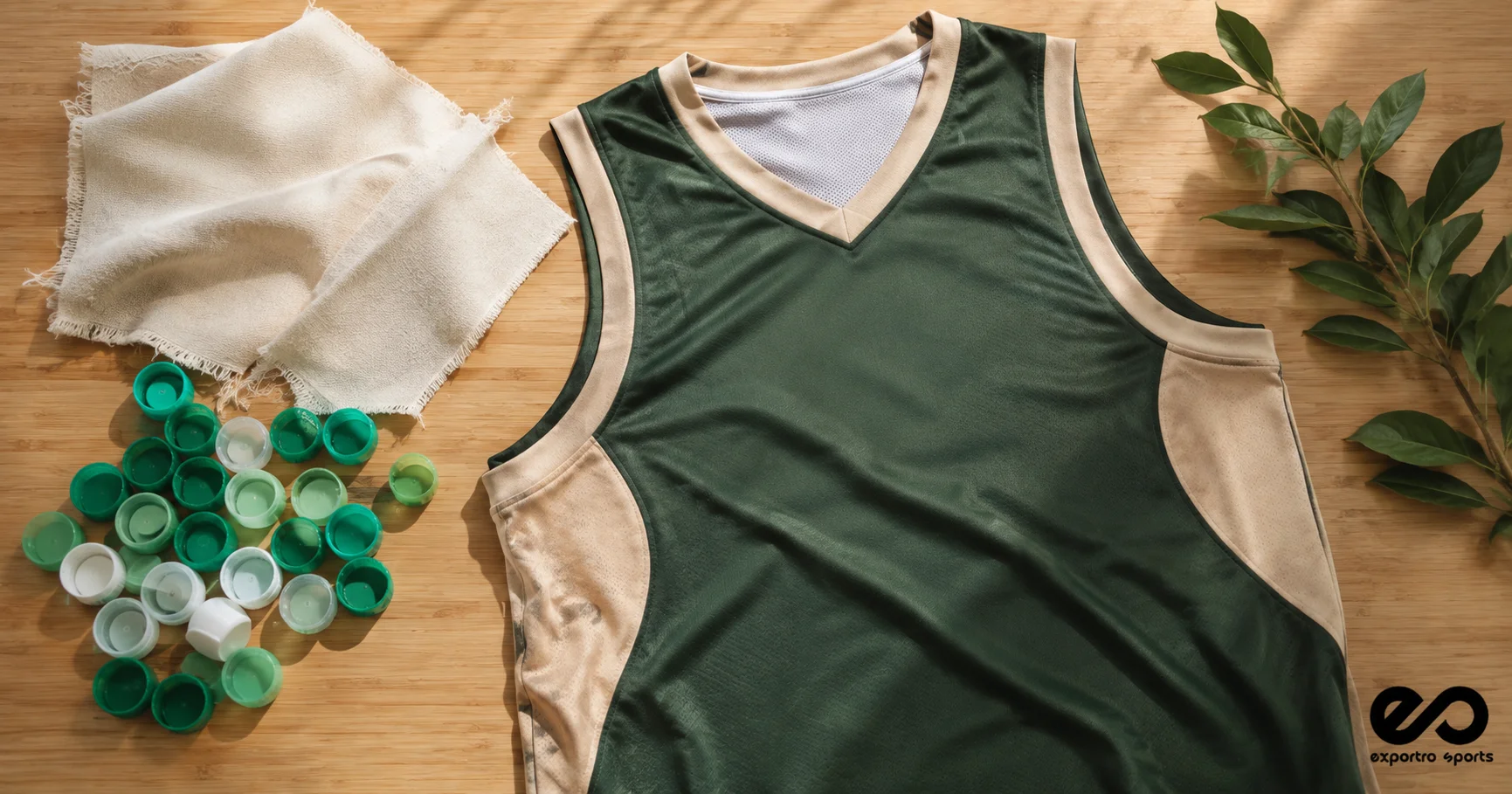
- Recycled polyester (rPET) — made by melting down existing plastic, often recycled water bottles, and re-spinning it into new fiber. This is by far the most common option in performance sportswear, since it’s chemically almost identical to standard polyester.
- Organic cotton — grown without synthetic pesticides, though it’s less common in basketball uniforms specifically since cotton doesn’t wick moisture as well as synthetic blends.
- Recycled spandex blends — used for the stretch component in fitted jerseys and shorts, made the same way as rPET.
In practice, when a supplier says “eco-friendly basketball uniform,” they almost always mean recycled polyester as the base fabric, sometimes blended with recycled spandex for stretch.
Truth 1: Performance Is Genuinely Comparable
This is the part that surprises a lot of people. Recycled polyester isn’t a compromise fabric — chemically, it behaves almost identically to virgin polyester once it’s spun into fiber. Moisture-wicking, breathability, and stretch recovery all test out roughly the same in independent fabric comparisons. If anything, the bigger performance factor is fabric weight and weave, not whether the polyester started as plastic bottles or raw petroleum.
Truth 2: The Cost Difference Is Real, But Usually Small
Eco-friendly basketball uniforms typically run somewhat higher per unit than standard ones — the recycling process itself costs more than producing virgin polyester at scale. That said, the gap has narrowed significantly as more manufacturers adopt rPET as a standard input rather than a premium add-on. For a full breakdown of what basketball uniforms cost in general, our basketball uniform buying guide covers pricing factors across fabric, printing, and design.
Truth 3: Durability Isn’t Sacrificed
A common assumption is that “recycled” means “lower quality,” but that’s not really true for rPET specifically. Since it’s chemically similar to standard polyester, it holds up to the same washing and wear expectations. The bigger factor in how long a uniform lasts is still fabric weight, printing method, and how well it’s cared for — something we cover in detail in our basketball uniform lifespan guide.
Truth 4: Not Every “Eco” Label Means the Same Thing
Here’s where it gets a little murkier. “Eco-friendly,” “sustainable,” and “green” aren’t regulated terms — any supplier can use them without third-party verification. If sustainability actually matters to your program (some schools and clubs have formal environmental commitments), it’s worth asking specific questions rather than trusting the label alone:
- What percentage of the fabric is actually recycled content?
- Is there a certification behind the claim (like GRS — Global Recycled Standard)?
- Is the recycled content in the main fabric, or just a small trim detail marketed as the whole product?
A supplier who can answer these clearly is generally telling the truth. A supplier who gets vague when asked is usually greenwashing.
Truth 5: It’s Worth It for Some Teams, Not Necessarily All
Realistically, eco-friendly basketball uniforms make the most sense for:
- School programs and clubs with a formal sustainability commitment or policy
- Organizations where the slightly higher cost is a minor factor compared to the rest of the budget
- Teams that want it as part of their brand identity or community messaging
They’re a lower priority for:
- Budget-tight rec leagues where every dollar matters more than the sourcing story
- Teams that just need reliable, durable gear and don’t have sustainability as a stated goal
Neither choice is wrong — it genuinely depends on what your program values and what your budget realistically allows.
According to the Textile Exchange’s Preferred Fiber Report, recycled polyester adoption across the sportswear industry has grown significantly in recent years, reflecting a broader shift toward verified recycled content rather than just marketing language.
Final Thoughts
Eco-friendly basketball uniforms aren’t a performance downgrade dressed up in nice packaging — the fabric genuinely holds up. The real question isn’t “does it work as well,” it’s “is the sourcing story worth the modest price difference for your specific program.” For some teams, yes. For others, a standard uniform that fits the budget better is just as reasonable a choice.
Curious what eco-friendly options Exportro Sports offers for your next basketball uniform order? Get in touch with our team to talk through fabric options that fit your budget and values.


 Hat
 Leather Belt
