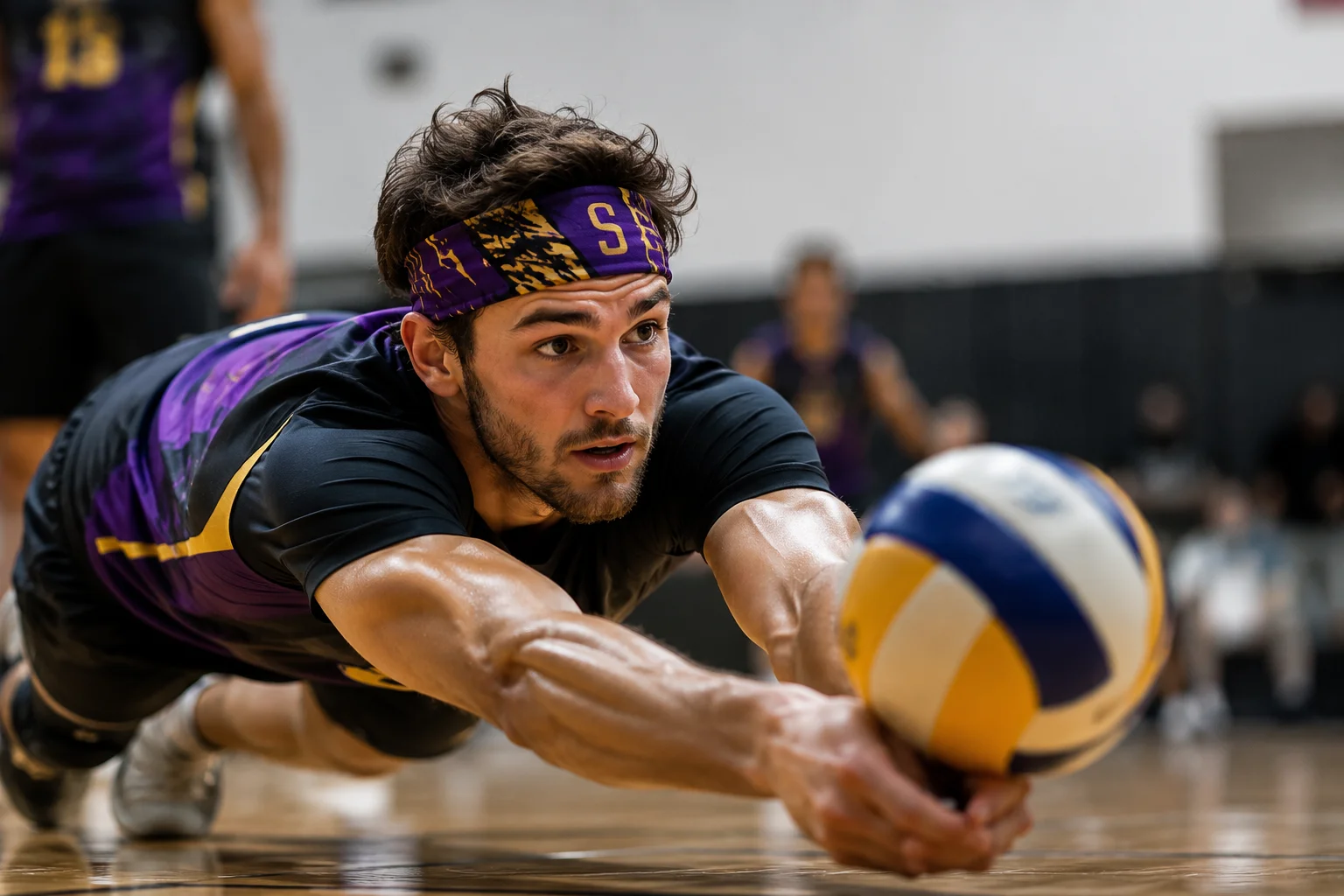
Custom volleyball headbands look like the simplest item on a team order — until half the roster shows up with a headband that slips during a dive, or a style that doesn’t match anyone else’s. Between tie-back versus elastic, sublimated versus embroidered, and even legality under league rules, there’s more to get right than most parents or team managers expect. Here’s what actually matters before you order custom volleyball headbands for your team.
1. Tie-Back vs. Elastic: They’re Not Interchangeable
The two dominant styles of custom volleyball headbands perform differently under match conditions:
- Elastic/stretch headbands pull on like a hairband and work well for most head sizes — the faster, cheaper option to produce and distribute to a roster.
- Tie-back headbands let each player adjust tightness individually, which matters during dives and quick direction changes when a loose band is more likely to slip.
Volleyball’s diving, jumping, and constant head movement make secure fit more important than in lower-contact sports — a headband that slides mid-rally is a real distraction during play, not just a cosmetic issue.
2. Check Your League’s Headband Rules First
Most competitive levels do allow headbands, but not without limits. Under NFHS volleyball uniform rules, headbands are legal but restricted to no wider than 2 inches, and beaded or decorative hair accessories must be secured to avoid coming loose during play. Before finalizing a design — especially anything wide, glittery, or with an attached bow — confirm it fits your league’s specific width and decoration rules so a legal design doesn’t get flagged before a match.
3. Sublimated vs. Embroidered Changes the Look and Feel
Custom volleyball headbands are typically finished one of two ways:
- Sublimated (dye infused into the fabric): allows full-color team logos, patterns, or gradients without adding texture or bulk — ideal for teams wanting a clean, branded look.
- Embroidered: raised, stitched text or a simple logo that holds up well over time but is limited to smaller, simpler designs.
For a team wanting matching headbands with a full-color logo, sublimation is generally the better fit — it stays flat against the skin and won’t peel or crack the way a printed transfer can after repeated washing.
4. Fabric Blend Actually Affects Performance
A volleyball headband’s job is moisture control during a physically demanding, fast-paced match, so fabric choice isn’t just about looks. A polyester-spandex blend handles moisture-wicking and holds color through repeated washing, while the spandex content gives the band enough stretch to stay snug without pinching. Pure cotton headbands look fine in photos but soak through quickly and lose their shape after a few wash cycles — not ideal for a team playing multiple matches in a single tournament weekend.
5. Order From the Same Place as the Rest of the Kit
Headbands are often ordered separately and late, which is exactly why they end up mismatched — a slightly different shade than the jersey, or a logo placement that looks off next to the rest of the uniform. Ordering custom volleyball headbands from the same manufacturer as the jerseys and warm-ups keeps colors and branding consistent across the entire kit, rather than looking like a last-minute add-on.
Getting Custom Volleyball Headbands Made Right
At Exportro Sports, we manufacture custom volleyball headbands in tie-back and elastic styles, sublimated or embroidered, matched exactly to your team’s uniform colors and logo. No minimum order required, so whether you need a full roster set or a small top-up order, you get the same attention to fabric and fit.
If headbands are just one piece of what you’re finishing out this season, our volleyball uniform buying guide covers the full kit from jerseys to libero uniforms to accessories like these. And if you’re also stocking practice gear, our guide to custom volleyball pinnies covers the same fabric-and-fit logic for scrimmage vests.
Conclusion
Custom volleyball headbands look like a small add-on, but tie style, league rules, finishing method, and fabric blend all affect whether they hold up through a full season of dives, jumps, and tournament weekends. Get these five details right, and your team’s headbands will match the rest of the kit — in both look and durability.


 Hat
 Leather Belt
