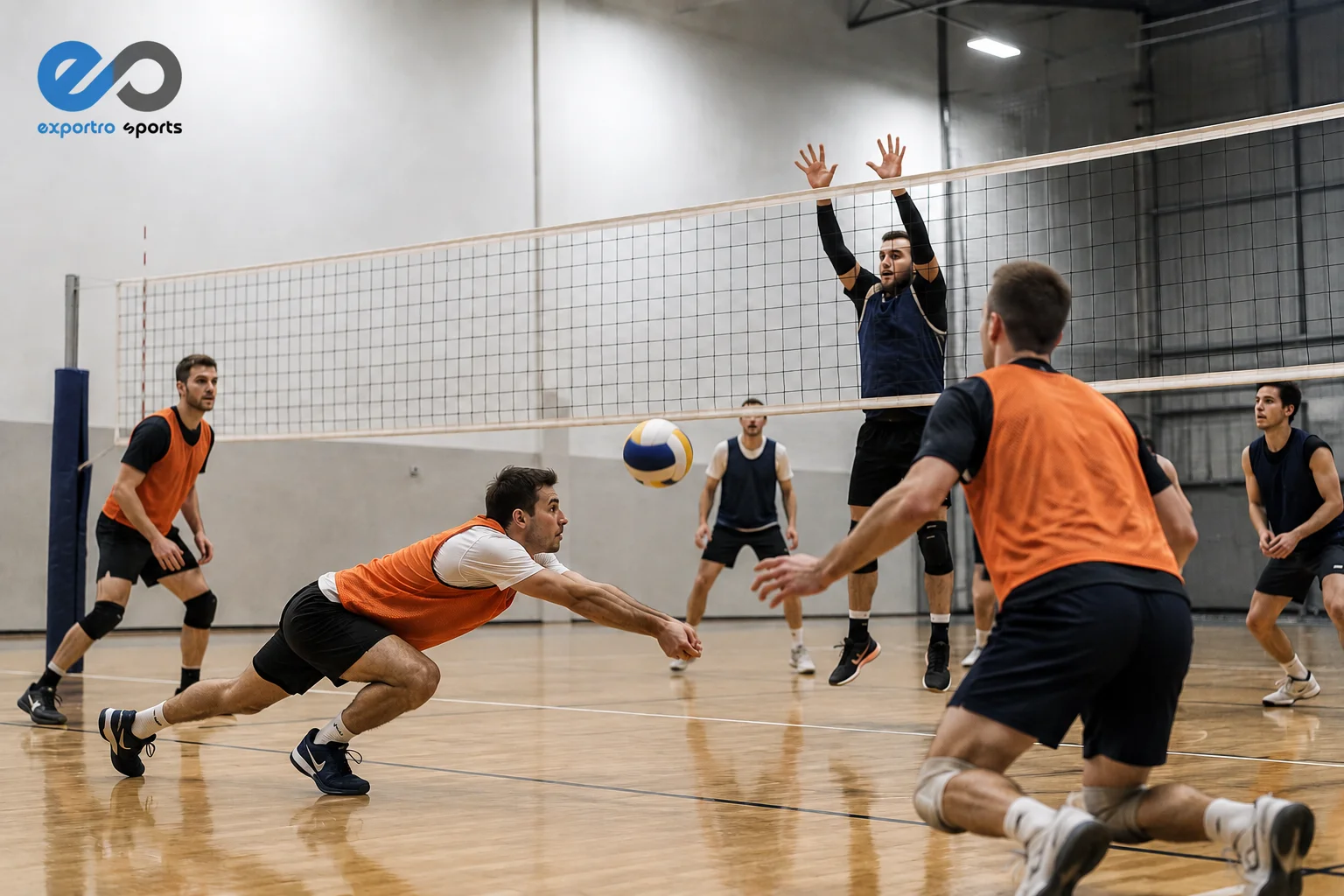
Custom volleyball pinnies are one of the most-used pieces of gear a program owns, and also one of the most overlooked when it comes time to order. Coaches run 6v6 scrimmages, split squads for competitive drills, and separate skill groups almost every practice — scrimmage-based training is a core part of how programs develop game-like decision-making, and all of it depends on quickly telling players apart by color. A poorly chosen set of custom volleyball pinnies makes all of that harder, not easier. Here are the five mistakes coaches most often make when ordering them, and how to avoid each one.
1. Buying One-Size-Fits-All Instead of Sized Sets
Bargain pinnie packs are almost always marketed as “one size fits all,” relying on stretchy fabric and loose armholes to cover every player. That works for a single pickup scrimmage, but a program running daily 6v6 drills with a roster spanning a 5’2″ libero to a 6’2″ middle blocker needs pinnies that actually fit each body type. Custom volleyball pinnies made in real youth-to-adult sizing hold their shape through a full season instead of bunching up or sliding off mid-rally.
2. Choosing the Wrong Fabric Weight for Constant Movement
Volleyball is one of the most physically demanding sports to scrimmage in — constant jumping, diving, and lateral movement means a pinnie needs to move with the player, not against them. Fabric that’s too thin tears at the seams from repeated diving and floor contact. Fabric that’s too heavy adds bulk and traps heat during full-speed drills. The right custom volleyball pinnies use a mid-weight, breathable mesh that can take contact with the floor without shredding, while staying light enough that players forget they’re wearing it mid-rally.
3. Skipping Reversibility to Save a Few Dollars
A single-color pinnie only splits your roster into two groups per set — a real limitation for coaches who scrimmage multiple squads (varsity, JV, and freshman groups sharing gym time) or run drills that need three or more team splits in one practice. Reversible volleyball pinnies solve this by giving each vest two colors: flip it inside out and you’ve created a second team split without buying a second set. For clubs juggling multiple age groups or squads on a shared budget, reversible pinnies pay for themselves fast.
4. Ordering Unnumbered Pinnies for Drill-Heavy Practices
Numbers matter more in volleyball scrimmages than most coaches expect, since fast-paced 6v6 play and rotation drills mean a coach is constantly calling out specific players mid-rally. Unnumbered pinnies work fine for a casual scrimmage, but any program running structured, rotation-heavy practice plans benefits from numbering that turns “the tall girl in green” into “12, rotate back.” Front and back numbering keeps that communication fast during live play.
5. Assuming You Need to Order in Bulk
This is the costliest mistake. Many suppliers only sell pinnies in packs of 12 or more, which forces small clubs, single-team purchases, or a mid-season top-up order into buying far more than needed. If a team only needs 6 replacement pinnies out of a 14-player roster, there’s no reason to be forced into ordering two full dozen just to get them.
Getting Custom Volleyball Pinnies Made Right
At Exportro Sports, we manufacture custom volleyball pinnies in sized sets, mid-weight breathable mesh, reversible or single-color, with or without numbering — and we don’t require a minimum order. Whether you need 6 replacement vests or a full roster set in two team colors, you get the same fabric quality and turnaround attention either way.
If pinnies are just one piece of what you’re outfitting this season, our volleyball uniform buying guide covers the full kit from jerseys to libero uniforms to practice gear like these. And if warm-ups are also on your list, our guide to volleyball warm-up jackets vs warm-up shirts covers that same fabric-and-purpose logic for the bench and pre-match drills.
Conclusion
Custom volleyball pinnies look like a simple purchase, but sizing, fabric weight, reversibility, and numbering all affect whether they hold up to daily scrimmages or fall apart within a season. Avoid these five mistakes, and your next set will actually do its job — telling teams apart, fast, without slowing practice down.


 Hat
 Leather Belt
